Secure Space Self Storage: How to Choose a Safe Unit and Save Money
In short, secure space self storage means renting a private, lockable unit at a guarded facility to keep belongings you do not need every day, from furniture during a house move to business stock and seasonal gear. A good facility combines gated access, cameras, individual unit alarms and clean, dry units, with month-to-month terms and clear pricing. This guide explains how to pick the right size, which security features actually matter, what storage costs in 2026, and how to pack so your belongings come back in the same condition they went in.


What Is Secure Space Self Storage?
Secure space self storage is a service where you rent a secure room, unit or container for a short or long period, and you keep the key or access code while the facility provides the building, the security and the access system. Renting works much like renting a small flat, but with less paperwork: you choose a facility, pick a unit size, sign a rental agreement, and receive a lock or a PIN code for the gate. A secure space self storage facility is used for many reasons, including moving house, downsizing, renovating, storing a student’s belongings over the summer, or keeping business inventory and documents somewhere safe. Most agreements are month to month, so you can leave with notice rather than being tied into a long contract, although some facilities offer discounts of 10 to 15 percent for longer commitments, according to a 2026 facility checklist.
The industry behind the service is large and well established, with more than 50,000 facilities in the United States and an industry worth about 50 billion dollars, according to the Self Storage Association’s 2025 industry report. That scale means most towns have several facilities to choose from, and competition keeps standards higher than they once were, with modern sites offering climate control, smart locks, online booking and 24-hour access. It also means quality varies widely, so the cheapest site is not always the safest, and a careful comparison before you sign will protect both your belongings and your budget. The rest of this guide walks through that comparison step by step.
How to Choose the Right Storage Unit Size
Choosing secure space self storage starts with measuring what you actually plan to store, because the wrong size wastes money in both directions. A unit that is too small leaves boxes stacked to the ceiling with no walkway, so you cannot reach anything at the back, while a unit that is too large means paying every month for empty floor space. Common sizes give a useful starting point: a 5 by 5 foot unit, about 25 square feet, holds a small closet’s worth of boxes and seasonal items; a 5 by 10 unit, about 50 square feet, suits a studio flat; a 10 by 10 unit, about 100 square feet, holds a one to two bedroom flat; a 10 by 15 unit, about 150 square feet, suits a two to three bedroom home; and a 10 by 20 unit, about 200 square feet, holds a three to four bedroom home or a vehicle. Visit the facility and look inside a unit before you commit, since online photos can be misleading about real dimensions.
Before you decide, make a simple inventory of everything going into storage, including furniture dimensions, the number of boxes, and any awkward items such as bikes, mattresses or white goods. Stack boxes in your mind or on paper, leave a walkway down the middle, and remember that tall units let you stack upwards, which can save you a size. If you plan to visit often, choose a unit with drive-up access or a ground-floor position, even if it costs slightly more, because carrying boxes up stairs or down long corridors gets old fast. If you are between two sizes, the larger one is usually the safer choice for a long stay, while the smaller one suits a short stay where you can pack tightly and rarely need access.
What Security Features Should a Storage Facility Have?
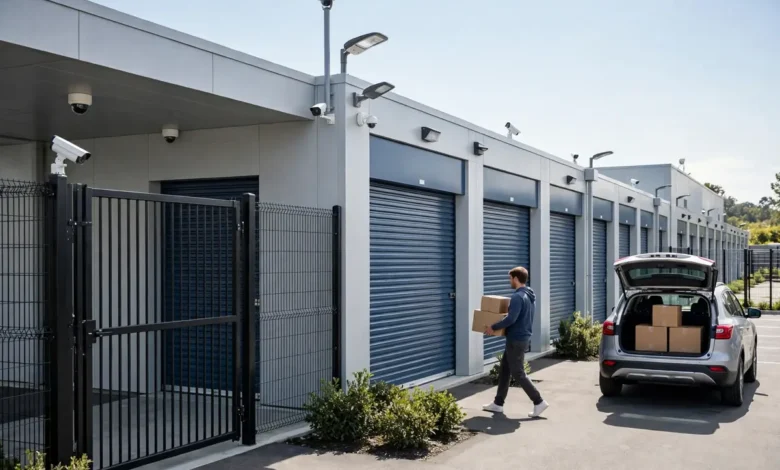
The security of a secure space self storage facility is what separates a reputable site from a risky one, and it deserves more attention than the monthly rent, because replacing stolen or damaged belongings costs far more than any saving on fees. Look first for 24-hour video surveillance covering hallways, entry points and parking areas, with recorded footage that management can review. Gated access should require a unique PIN code or key card for each tenant, so the facility knows who enters and when, and individual unit door alarms should trigger if a door opens without authorisation. Good lighting throughout the site, including car parks and loading areas, matters as much as cameras, and perimeter fencing at least six feet tall with no gaps is a basic expectation rather than a luxury.
Beyond the basics, check whether the facility has on-site management during business hours or regular security patrols, and whether it uses modern smart locks that log every opening. Ask how long camera footage is kept, who can access it, and what happens if an alarm goes off outside office hours, since the answers reveal whether security is a real system or just a sales claim. Visit in person and look for warning signs such as broken fencing, dark corners, damaged doors or a gate that stands open, because a site that cannot maintain its own defences will not protect your belongings either. A facility that is proud of its security will happily show it off and explain it, while one that dodges the question is telling you everything you need to know.
Do You Need a Climate-Controlled Unit?
A climate-controlled unit keeps temperature and humidity within a steady range, typically between 55 and 80 degrees Fahrenheit with humidity below 55 percent, and it is worth the extra cost for anything sensitive to heat, cold or damp. Electronics, wooden furniture, leather goods, photographs, documents, artwork, musical instruments and mattresses are all at risk in a standard unit during hot summers or freezing winters, since extremes can warp wood, crack leather, damage circuits and encourage mould. Climate control typically adds 25 to 50 dollars a month to the rent, according to a 2026 facility checklist, which is a modest price compared with replacing a damaged television, a warped table or a box of family photographs. If you are storing only metal tools, plastic garden furniture or sturdy boxes for a few weeks, a standard unit will usually do.
The decision also depends on your local climate and how long items will stay stored, because a short stay in mild weather is very different from a year in a humid or freezing region. Ask the facility how its climate-controlled units are monitored, whether the temperature is checked regularly, and whether the units sit inside the building, since indoor units are naturally better protected from weather than outdoor ones. Check for signs of damp, such as staining on walls or a musty smell, when you inspect a unit, and avoid any facility where the corridors feel damp or the doors show rust. If in doubt, choose climate control for anything you could not afford to replace, and use a standard unit only for robust items on a short stay.
How Much Does Self Storage Cost in 2026?
Secure space self storage costs vary widely by location, unit size and features, but recent figures give a useful benchmark for comparison. According to Angi, updated on 9 July 2026, storage rental typically costs between 1 dollar and 1 dollar 80 per square foot, with monthly costs averaging around 240 dollars but ranging from as little as 20 dollars to as much as 450 dollars. A standard 10 by 10 foot unit averages about 120 dollars a month nationally, according to the 2026 Self Storage Cost Index cited in a 2026 guide, though prices run from around 40 dollars in rural areas to more than 300 dollars in major cities. Urban facilities typically charge 30 to 50 percent more than rural ones, and ground-floor or drive-up units command a premium over upper-floor hallway units.
The monthly rent is only part of the total, so ask for an itemised quote before you sign anything. Some facilities advertise a low base rate and then add an administrative or setup fee, a security deposit, a lock charge or a mandatory insurance premium, and rates can rise after an introductory period, so ask when and by how much. Compare at least three facilities using the same unit size and features, check whether long-term rentals earn a discount, and read the contract for notice periods and late-payment charges. Home insurance sometimes covers belongings in storage, so check your existing policy before buying the facility’s insurance, and keep every quote in writing so you can compare the true total rather than the headline rate.
How to Pack and Protect Your Belongings
Once your secure space self storage unit is booked, good packing decides whether your belongings survive the stay in good condition. Use sturdy, uniform boxes that stack safely, label every box on two sides with its contents and the room it came from, and keep a simple inventory list on your phone so you can find things without opening every box. Wrap furniture in covers or old sheets, stand mattresses on their sides with covers, and place wooden furniture on pallets or plastic sheeting to keep it off a cold concrete floor. Put the items you will need first near the front of the unit, leave a walkway down the middle, and stack heavier boxes at the bottom with lighter ones on top, so nothing gets crushed.
Moisture and pests cause more storage damage than theft, so take simple precautions before anything goes inside. Make sure everything is clean and completely dry, since damp fabric or food residue attracts mould and insects, and never store perishable food, flammable liquids, hazardous chemicals or illegal goods, which are banned by almost every facility. Use sealed plastic containers for documents, photographs and fabrics, add silica gel sachets to boxes of sensitive items, and avoid storing anything directly against an exterior wall where condensation forms. Check on your unit every month or two if you can, especially after heavy rain or extreme weather, so a small problem is caught before it becomes a ruined box of belongings.

Conclusion
Choosing the right storage comes down to four decisions: the right size for what you actually own, security you have checked in person rather than taken on trust, climate control for anything sensitive, and a total price you have compared across at least three facilities. The figures in this guide give you a benchmark for 2026, but local prices and conditions vary, so treat them as a starting point for your own quotes rather than a promise. Take the time to visit, inspect a unit, ask about fees and alarms, and read the contract before you sign, because an hour of checking now saves months of regret later.
Once you have chosen, pack with care, label everything, and keep an inventory so you can find what you need without emptying the unit. Store the items you will need first near the door, protect anything sensitive from damp, and check on the unit now and then while it is rented. Done this way, self storage is a genuinely useful service, giving you breathing space during a move, a renovation or a busy season, with your belongings safe, dry and ready whenever you need them again.
What Size Storage Unit Do I Need for a One-Bedroom Flat?
A secure space self storage unit of 10 by 10 feet, about 100 square feet, usually holds the contents of a one-bedroom flat, including a bed, a sofa, a wardrobe, a chest of drawers, a television and around 20 to 30 boxes. If you also have a bike, a washing machine or a large bookcase, a 10 by 15 foot unit, about 150 square feet, gives comfortable extra room and a walkway. The exact size depends on how much furniture you own and how tightly you are willing to pack, so measure your largest items and count your boxes before you book. Visiting the facility to look inside both sizes is the surest way to decide, and most staff will help you estimate.
Can I Access My Storage Unit at Any Time?
Access hours vary by facility, so you should confirm them before you sign, because not every site offers 24-hour entry. Many modern facilities provide 24-hour access through a personal PIN code or key card at the gate, while others limit entry to office hours or to set gate hours such as 6 in the morning until 10 at night. If you work shifts or may need late access, choose a facility with round-the-clock entry and ask whether there are extra charges for it. As of November 2026, no single access standard applies across the industry, so the only reliable answer is the one printed in the rental agreement for your chosen facility.
What Items Are Not Allowed in Self Storage?
Most self storage facilities ban flammable liquids and fuels, hazardous chemicals, explosives, perishable food, live plants and animals, and anything illegal, because these items endanger other tenants’ belongings and break the terms of the rental agreement. Perishable food attracts pests, fuel and chemicals create a fire risk, and illegal goods can lead to the facility opening your unit with the authorities. Some facilities also restrict vehicle storage to units designed for it, and may require proof of ownership and insurance. If you are unsure whether an item is allowed, ask the facility in writing before you store it, since breaking the rules can end your agreement and leave you liable for any damage caused.
Do I Need Insurance for My Stored Belongings?
Insurance for stored belongings is often required by the facility, either through its own policy or proof of your own cover, and it is worth having even when it is optional. Start by checking your home insurance policy, since many policies already cover possessions kept in a storage facility, at least up to a limit, and that may be enough. If your home policy does not cover storage, or the limit is too low for what you are storing, the facility’s own insurance is usually available for a small monthly premium. Compare the cover, the excess and the exclusions before you choose, and keep a photographed inventory of valuable items, since a claim is far easier with proof of what was stored.