7-Day Protein Diet Plan for Weight Loss: A Practical Guide With a Sample Week
A 7-day protein diet plan for weight loss is a structured week of eating that puts a lean protein source at every meal, keeps calories moderately below what your body uses, and fills the rest of the plate with vegetables, wholegrains and healthy fats. Protein helps in three ways: it keeps you feeling full for longer than carbohydrate or fat, it helps preserve muscle while you lose fat, and it costs your body more energy to digest. This guide explains how much protein to aim for, which foods deliver it best, and what a realistic sample week looks like — as general information, not as a personal prescription, and with the honest limits of what seven days can do.


How Does a High-Protein Diet Help With Weight Loss?
Weight loss comes down to a simple idea: eat fewer calories than your body uses, and do it in a way you can sustain. A high-protein plan helps with the second half of that sentence. Protein is the most satiating macronutrient, which means a meal built around protein keeps you feeling full for longer than a meal built around bread, rice or pasta alone. That matters because the hardest part of any weight-loss plan is not knowing what to eat — it is staying with the plan when hunger strikes in the late afternoon. A breakfast of eggs and wholemeal toast will usually keep you satisfied far longer than a breakfast of jam on toast, even at the same number of calories.
Protein also protects your muscle while you lose weight. When you eat fewer calories, your body can burn muscle as well as fat, and losing muscle slows your metabolism and makes it harder to keep the weight off. Eating enough protein, especially combined with some resistance exercise, helps your body hold on to muscle and burn fat instead. Protein also has a higher thermic effect than carbohydrate or fat, which means your body burns more calories digesting it. None of this makes protein a magic solution — the calorie deficit still does the work — but it makes the deficit easier to live with, and that is why so many people find a high-protein approach easier to stick to than a low-fat or very-low-calorie plan. That is the core idea behind a 7-day protein diet plan for weight loss: the calorie deficit does the work, and the protein makes the deficit liveable.
How Much Protein Do You Actually Need?
The amount of protein you need depends on your body weight, your activity level and your goal. The UK Reference Nutrient Intake for protein is 0.75 grams per kilogram of body weight per day for sedentary adults, which is the minimum to avoid deficiency, not the amount that best supports weight loss. For people following a calorie deficit with the aim of improving body composition, most clinical and sports nutrition guidelines recommend significantly more: around 1.2 to 1.6 grams per kilogram per day for moderately active adults, and 1.6 to 2.2 grams per kilogram for people who train regularly with weights. The International Society of Sports Nutrition suggests about 1.4 to 2.0 grams per kilogram a day for most people who exercise regularly.
To turn that into a daily number, multiply your body weight in kilograms by the range that fits you. An 80-kilogram person aiming for 1.2 to 1.6 grams per kilogram would target roughly 96 to 128 grams of protein a day. A 60-kilogram person at the same range would target roughly 72 to 96 grams a day. If you carry a lot of extra weight, base the calculation on a realistic goal weight rather than your current weight, or the number can become unhelpfully high. Spreading protein across the day works better than eating it all at dinner: aim for roughly 20 to 40 grams at each meal, plus a protein-rich snack, which keeps you full and supports your muscles throughout the day. These are general guidelines, not a prescription — if you have kidney disease, liver disease, or another medical condition, or you are pregnant, talk to your doctor or a registered dietitian before raising your protein intake.
What Foods Give You the Most Protein for the Fewest Calories?
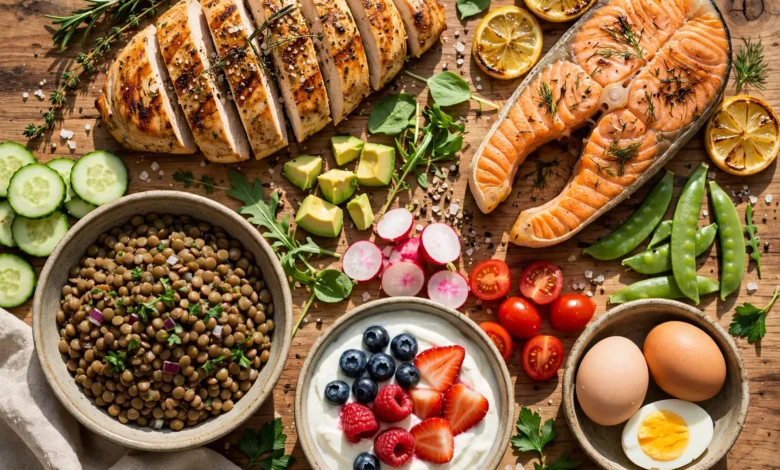
The best protein foods for weight loss deliver a lot of protein for relatively few calories, so you can hit your protein target without overshooting your calorie budget. Chicken breast is the classic choice: around 31 grams of protein per 100 grams cooked, for about 165 calories. Fish is similarly efficient — salmon and cod give 20 to 25 grams of protein per 100 grams for 100 to 180 calories — and oily fish adds healthy fats as well. Eggs are cheap, versatile and complete, with about 6 grams of protein each, while Greek yoghurt gives around 10 grams per 100 grams and works for breakfast or a snack.
Plant proteins deserve just as much attention. Lentils, chickpeas and beans give 8 to 9 grams of protein per 100 grams cooked, along with fibre that keeps you full and feeds your gut. Tofu gives around 8 grams per 100 grams and takes on the flavour of whatever you cook it with, while tempeh is denser still. Cottage cheese, low-fat dairy and lean beef round out the list, and a small handful of nuts adds protein and healthy fats, though nuts are calorie-dense, so a small portion is enough. The practical rule is simple: build each meal around one of these foods, add plenty of vegetables, add a small portion of wholegrains or starchy vegetables for energy, and add a drizzle of healthy fat rather than a flood of it.
The 7-Day Protein Diet Plan for Weight Loss: A Sample Week
This sample week is a template, not a prescription: it averages around 1,800 calories and 140 grams of protein a day, which suits a moderately active adult aiming for a deficit of about 500 calories a day. Adjust portions to your own calorie needs, which vary with your age, height, weight and activity level, and swap any food you dislike for an equivalent protein source. Each day follows the same pattern — protein at breakfast, lunch and dinner, plus one or two protein-rich snacks — so the plan is easy to remember and repeat.
Day one starts with scrambled eggs and spinach on wholemeal toast, followed by a grilled chicken salad with mixed leaves and olive oil dressing, and baked salmon with roasted broccoli and brown rice for dinner, with Greek yoghurt and berries as a snack. Day two leans plant-based: overnight oats with banana and chia seeds for breakfast, lentil soup with wholemeal bread for lunch, and a chickpea and vegetable curry with cauliflower rice for dinner. Day three is a midweek reset: low-fat Greek yoghurt with oats and berries, a tuna and sweetcorn wrap in a wholemeal tortilla, and a turkey mince stir-fry with mixed vegetables and noodles. Day four focuses on fibre: porridge with flaxseeds and banana, a grilled fish fillet with quinoa and salad, and a lentil and lean turkey soup. Day five keeps favourite foods: two boiled eggs with wholemeal soldiers and fruit, a chicken and hummus wrap with an apple, and lean beef with sweet potato and green beans. Days six and seven are flexible: repeat the meals you liked best, or rotate the options above, keeping the same pattern of protein at every meal and a vegetable with every plate.
What Does a Typical Day Look Like?
A typical day on this plan is built around three meals and one or two snacks, each containing protein, which keeps hunger away and makes the day feel normal rather than restrictive. This is what a day on a 7-day protein diet plan for weight loss actually feels like in practice. Breakfast might be a yoghurt bowl: 250 grams of non-fat Greek yoghurt with granola, berries and a tablespoon of chia seeds, giving roughly 375 calories and 31 grams of protein. Lunch could be a chicken hummus wrap with a whole-wheat tortilla, cucumber, peppers and spinach, plus an apple — about 520 calories and 44 grams of protein. Dinner might be baked salmon with quinoa and roasted asparagus, around 540 calories and 40 grams of protein, and the snacks could be cottage cheese with cucumber and a banana with peanut butter, adding about 345 calories and 23 grams of protein. That day totals about 1,780 calories and 138 grams of protein.
Notice what the day does not include: no skipping meals, no tiny portions, and no foods you have to buy from a specialist shop. Every meal uses ordinary foods from an ordinary supermarket, and every plate has vegetables on it. The plan also leaves room for real life: a coffee with milk, a square of dark chocolate, or a meal out with friends can all fit, because the plan is built on a pattern rather than a rigid menu. If you eat out, choose a grilled protein, ask for vegetables instead of chips, and keep the sauce on the side — the same principles, applied to a restaurant plate. That flexibility is what makes a seven-day plan something you can actually finish, and finishing is what matters.
What Should You Avoid on a High-Protein Plan?
A high-protein plan works best when you are honest about what undermines it. The first thing to limit is ultra-processed food: ready meals, crisps, biscuits, sugary drinks and takeaway food are usually high in calories and low in protein, so they fill your calorie budget without filling you up. Sugary drinks deserve special attention, because a single large fizzy drink can contain 200 calories or more without any protein or fibre, and liquid calories do not satisfy hunger the way food does. Alcohol is another quiet problem: it adds calories, weakens your resolve around food, and can disturb your sleep, which in turn makes you hungrier the next day.
The second thing to avoid is turning a high-protein plan into a very-low-calorie plan. Eating under 800 calories a day is a very-low-calorie diet, and according to NICE guidance it requires clinical supervision — it is not something to try on your own for a week. A moderate deficit of around 500 calories a day is the approach NHS guidance supports for steady weight loss of about 0.5 kilograms a week, and it is far more sustainable. Also avoid the trap of eating protein at the expense of everything else: your body still needs fibre from vegetables and wholegrains, healthy fats, and a variety of vitamins and minerals. A plan that is all chicken and no vegetables is not a healthy plan, however much protein it contains.
How Do You Make the Plan Fit Your Life?
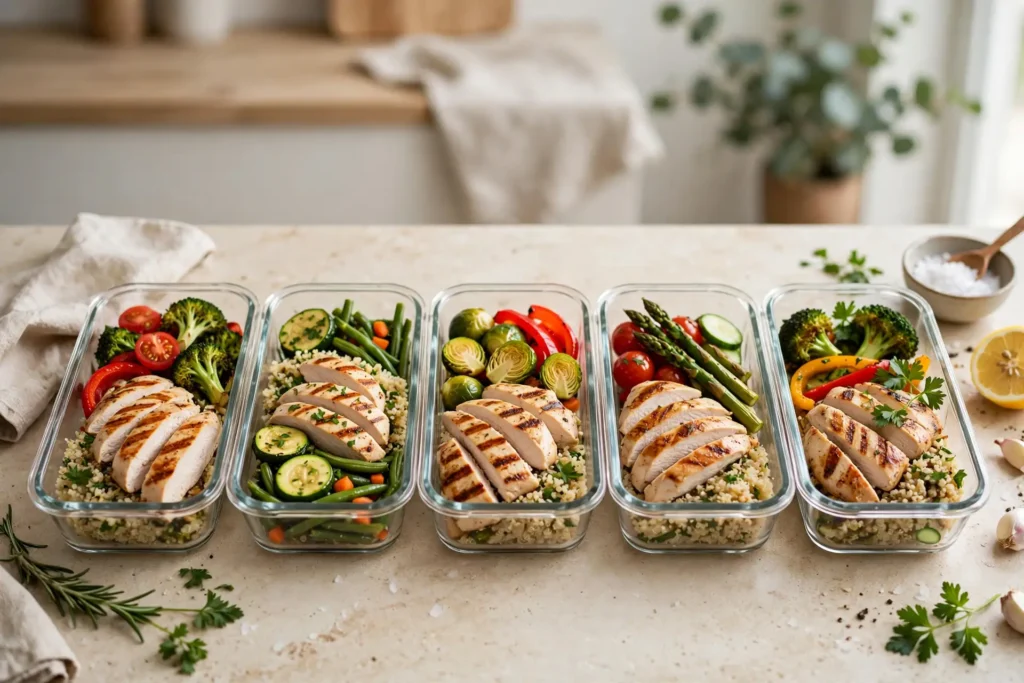
A diet plan only works if it fits your life, so the practical details matter as much as the menu. Cook in batches: grill several chicken breasts, cook a pot of lentils, and prepare a tray of roasted vegetables on a Sunday, and you have the makings of three or four quick meals during the week. Keep your kitchen stocked with the plan’s building blocks — eggs, Greek yoghurt, tinned tuna, frozen fish, lentils, oats and frozen vegetables — so a healthy meal is always the easy option rather than a special effort. Frozen vegetables are just as nutritious as fresh ones and save both time and waste.
Plan for the moments that usually break a diet. If you know you get hungry at four in the afternoon, keep a protein snack ready — a small pot of cottage cheese, a boiled egg, or a handful of nuts — rather than reaching for biscuits. If you eat lunch at work, take it with you in a container the night before, because buying lunch out usually means more calories and less protein. Drink water through the day, and keep a bottle on your desk, since thirst is often mistaken for hunger. Finally, track your progress by how you feel and how your clothes fit, not only by the scales: weight fluctuates day to day with water and food, so weigh yourself once a week at the same time, and judge the plan over a month rather than a single day.
Is a High-Protein Diet Safe for Everyone?
A high-protein diet is safe for most healthy adults, but it is not right for everyone, and honesty about that matters. People with existing kidney disease should speak to their clinician before increasing protein, because the kidneys process the waste products of protein, and a high intake can add strain — NICE guideline NG203 advises dietetic input for people with chronic kidney disease who want to change their protein intake. People with liver disease, gout, or other medical conditions should also seek advice first, as should anyone who is pregnant or breastfeeding. Older adults, on the other hand, often need more protein than the standard recommendation, with guidelines suggesting 1.0 to 1.2 grams per kilogram a day as a minimum to protect against age-related muscle loss.
For healthy adults, the main risks of a high-protein plan come from doing it badly rather than from protein itself. A plan that relies heavily on processed meat, skips vegetables, or ignores hydration can cause constipation, bad breath and tiredness, and it can crowd out the fibre and nutrients your body needs. Drink plenty of water, eat vegetables at every meal, choose lean and plant proteins most of the time, and keep processed meat to a minimum. If you feel unwell, unusually tired, or notice anything worrying while following any diet plan, stop and speak to your doctor. General information in an article is never a substitute for personal medical advice, and a registered dietitian can tailor a plan to your body, your health and your life.
Conclusion
A 7-day protein diet plan for weight loss works when it is built on three simple habits: a lean protein source at every meal, a modest calorie deficit of around 500 calories a day, and a plate that still has vegetables, wholegrains and healthy fats on it. Aim for roughly 1.2 to 1.6 grams of protein per kilogram of body weight, spread across the day in doses of 20 to 40 grams per meal, and use ordinary foods — chicken, fish, eggs, Greek yoghurt, lentils and tofu — rather than expensive supplements. Expect steady progress of about half a kilogram a week, not a dramatic transformation in seven days, because the honest goal of a week is to prove to yourself that the pattern works and that you can live with it. Start with one week, keep the meals you liked, and let a good week become a good month.
How much weight can I lose in 7 days?
A realistic and healthy amount to lose in seven days is around 0.5 kilograms, which is what a moderate calorie deficit of about 500 calories a day produces, in line with NHS guidance. You may see a bigger drop on the scales in the first week, but much of that is usually water rather than fat, especially if you have cut back on salty or processed foods. Rapid weight loss of several kilograms in a week is rarely fat loss, and it is hard to sustain. Judge the plan by how you feel, how your clothes fit, and whether you can keep the pattern going, rather than by a single week’s number on the scales.
Can vegetarians follow a high-protein diet plan?
Yes, vegetarians can follow a high-protein diet plan, and the sample week above includes plant-based days built around lentils, chickpeas, tofu, eggs and dairy. Lentils and beans give 8 to 9 grams of protein per 100 grams cooked, tofu gives around 8 grams per 100 grams, and Greek yoghurt, cottage cheese and eggs add more. Vegans can reach their target with tofu, tempeh, lentils, chickpeas, edamame and wholegrains, though they need to plan a little more carefully to get enough protein at each meal. A registered dietitian can help tailor the amounts to your body and your food preferences.
Do I need protein powder?
No, you do not need protein powder to follow a high-protein diet plan. Most people can reach their protein target with ordinary foods such as chicken, fish, eggs, Greek yoghurt, lentils and tofu, and whole foods bring fibre, vitamins and minerals that a powder does not. Protein powder can be convenient — for example, after a workout, or on a busy morning when you blend it into oats — but it is a supplement, not a requirement. If you do use it, choose a plain product without added sugar, and count it towards your daily protein total rather than adding it on top of full meals.
What if I get hungry on a protein diet?
If you get hungry on a protein diet, first check whether you are actually eating enough: a plan that leaves you constantly hungry is usually a plan with too few calories, and a deficit larger than about 500 calories a day is hard to sustain. Make sure every meal and snack contains protein, because a snack without protein — a biscuit or a piece of fruit alone — will not keep you full for long. Add volume with vegetables and salads, which fill your plate for very few calories, and drink water regularly, since thirst is often mistaken for hunger. If hunger persists despite eating enough, speak to a dietitian rather than pushing through it.
Should I exercise while following this plan?
Yes, exercise helps a high-protein plan work better, and you do not need to do anything extreme. Resistance exercise — bodyweight movements, weights or resistance bands two or three times a week — helps your body keep muscle while it loses fat, which is exactly what the extra protein is there to support. Walking is also valuable: a daily brisk walk of 30 minutes adds to your calorie deficit without making you ravenous. Start gently if you are new to exercise, build up gradually, and remember that the plan’s job is to make the deficit sustainable, while exercise’s job is to protect your muscle and your mood.
Sources: NHS guidance on healthy weight loss | British Dietetic Association