Fix Phones Near Me: How to Find a Trusted Local Phone Repair Shop
When your phone screen cracks, your battery dies by lunchtime, or your charging port stops working, the first thing most people search is fix phones near me, and the direct answer is that a good local repair shop can usually fix a cracked screen in under an hour for far less than the manufacturer charges — but the quality of the repair depends entirely on which shop you choose. A screen replacement at an independent UK shop typically costs from around £60 for an older iPhone to £150 or more for a newer model, while Apple itself charges £159 to £389 depending on the model, so the savings are real, but so are the differences in parts, warranty and workmanship. This guide explains what local phone repair shops can fix, what it costs in 2026, how to choose a shop you can trust, what to do before you hand your phone over, and the scams to watch out for. Prices in this article are typical UK guide ranges from published sources, checked in November 2026, and are not quotes — always get a price for your exact model before you book.

What Can a Local Phone Repair Shop Actually Fix?
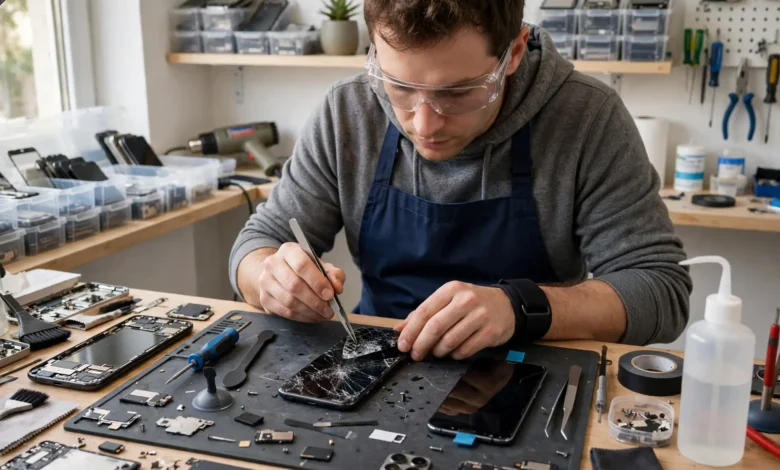
A good local phone repair shop can fix far more than a cracked screen, and knowing the full list helps you judge whether a shop is a genuine repairer or just a screen-swap stall. Screen replacement is the most common job, covering cracked glass, a display that no longer responds to touch, dead pixels and lines across the screen, and most shops carry screens for the popular iPhone and Samsung models in stock. Battery replacement is the second most common job, and it is the fix for a phone that dies quickly, shuts down at 30 percent, or has a swollen battery pushing the back off the phone — a swollen battery is a safety issue and should be dealt with promptly. Charging port repair covers a port that only works at a certain angle, a cable that falls out, or a phone that will not charge at all, and it is often a simple clean or a port replacement rather than a new phone. Shops also fix rear glass and camera lenses, replace cameras that will not focus, repair speakers and microphones, fix buttons that have stopped working, and replace a phone that has been in water, although water damage is the one repair where no honest shop will promise a result before they have opened the phone and tested it. Some shops also offer data recovery, software repairs, and board-level repairs for faults that other shops turn away, and those are the shops worth remembering.
The limits matter as much as the services, because an honest shop will tell you what it cannot do. A phone that has been bent, crushed or run over may have frame damage that makes a reliable repair impossible, and a phone with a damaged motherboard may cost more to fix than it is worth. Some newer phones have parts paired to the device by the manufacturer, which means a replacement screen or battery fitted by an independent shop may trigger a warning message or lose a feature such as True Tone on an iPhone or fingerprint calibration on a Samsung, and a good shop will explain that before they start. Water damage is unpredictable: a phone can work perfectly after a clean and dry, or it can fail weeks later as corrosion spreads, so any shop that guarantees a water-damaged phone is overpromising. And if your phone is still under the manufacturer’s warranty, a third-party repair can affect that warranty, so check your cover before you book. A shop that explains these limits upfront is a shop that respects you, and a shop that promises everything with no caveats is a shop to be careful with.
How Much Does It Cost to Fix Phones Near Me in 2026?
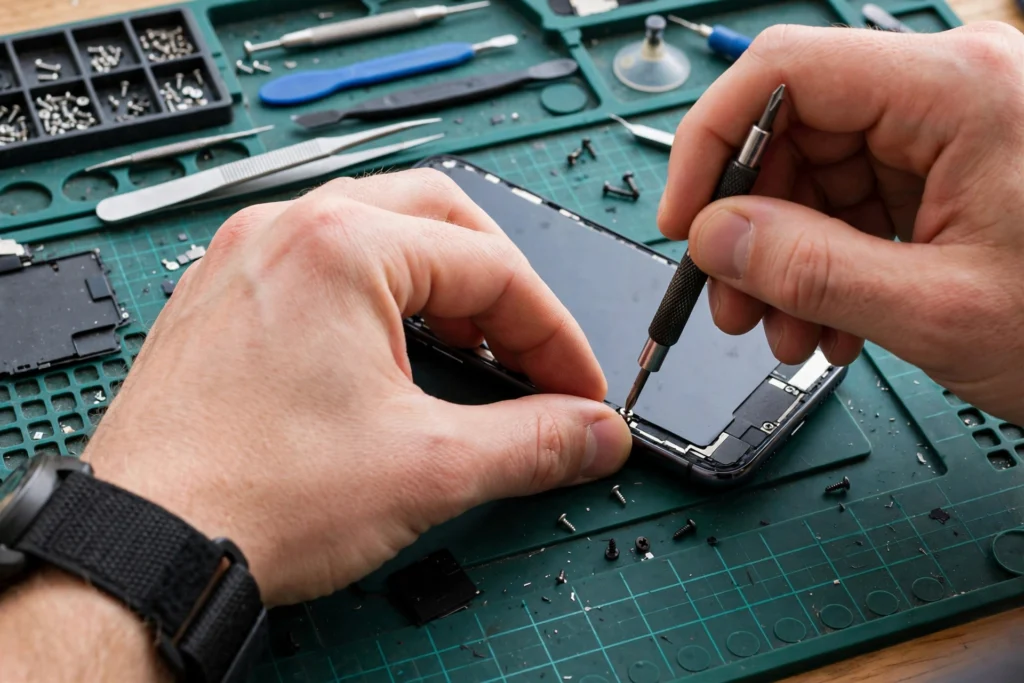
Screen replacement is the repair most people ask about when they search for fix phones near me, and the price depends on your phone model, the quality of the replacement screen, and where you take it. Apple‘s own UK prices, effective November 2026, put an out-of-warranty iPhone screen replacement at £159 for an iPhone SE, £219 for an iPhone 11, £289 for an iPhone 16, £349 for an iPhone 17 and £389 for an iPhone 17 Pro Max, and those prices exclude taxes, so the final bill is higher. With AppleCare+, the same repair costs a fixed service fee of £25 for screen damage, which is why AppleCare+ is almost always the cheapest route if you have it. Independent shops charge far less: typical UK pricing in 2026 puts an iPhone SE or iPhone 8 screen at £50 to £80, an iPhone 11 or 12 at £80 to £130, an iPhone 13 or 14 at £110 to £170, and an iPhone 15 or 16 at £140 to £220, with the exact price depending on whether the replacement screen is a genuine Apple part, a genuine refurbished part, or a high-quality aftermarket panel. Samsung screens are similar in range, and a screen repair for a mid-range Android phone is often cheaper still, because the parts cost less. Always ask which type of screen the price covers, because a cheap quote for an aftermarket screen and an expensive quote for a genuine screen are not the same offer, and the difference in quality is real.
Battery replacement is cheaper than a screen, and it is often the best value repair you can buy. Apple charges £65 to £209 for an out-of-warranty iPhone battery depending on the model, with an iPhone 17 battery at £95 and an iPhone 17 Pro Max at £109, while independent shops typically charge £40 to £80 for most models. A new battery can transform a phone that dies by lunchtime into one that lasts the whole day, and it is worth considering before you buy a new phone, because a phone with a fresh battery and a working screen is often good for another two years. Charging port repairs usually cost £30 to £80, and a surprising number of charging problems are fixed by a careful clean of lint from the port, which some shops will do for free. Rear glass replacement is more expensive than a screen on many models, because the back is glued to the body and takes longer to replace, and camera repairs vary widely by model. DIY repair kits cost £20 to £80 for a screen, but they are only a good idea if you are confident with small electronics, because a phone is easy to damage further, and a failed DIY repair usually costs more to fix than the original problem. As a rule, if the repair costs more than half the value of the phone, think carefully about whether a replacement makes more sense.
Apple vs Samsung vs Other Android: Does the Brand Change the Price?
When you search for fix phones near me, the brand of your phone changes the repair price more than almost anything else, and the reason is parts: Apple and Samsung control the supply of genuine parts, and independent shops have to work around that. iPhones are the most commonly repaired phones in the UK, so parts are widely available and prices are competitive, but Apple’s parts-pairing system means some replacement parts trigger a warning in Settings, and features such as True Tone may not work with a non-genuine screen unless the shop can calibrate it. Samsung phones are also widely repaired, and their screens are often more expensive than iPhone screens of the same age, because Samsung’s AMOLED displays cost more to manufacture. Google Pixel phones are less common in repair shops, so parts can be harder to find and prices can be higher, although the situation has improved as Pixels have become more popular. Cheaper Android brands such as Xiaomi, Motorola and OnePlus vary widely: some models have cheap, plentiful parts, while others have almost no independent repair support at all, which means the manufacturer or an authorised service centre is the only realistic option. Before you buy a phone, it is worth checking how repairable it is, because a phone that no independent shop can fix is a phone that will cost you the manufacturer’s price every time something breaks.
The manufacturer route and the independent route each have real advantages, and the right choice depends on your phone and your priorities. Apple and Samsung’s own repair services and authorised service providers use genuine parts, keep your warranty intact, and calibrate features such as the screen and the fingerprint sensor properly, but they charge the most and may take longer, especially if the phone has to be sent away. Independent shops are cheaper, usually faster — many screen repairs are done while you wait — and more convenient, but the quality of the parts varies, and you need to ask what you are getting. A third option is the manufacturer’s self-service repair programme, which sells genuine parts and tools to confident owners, but it is fiddly and only suits people who enjoy taking electronics apart. For a phone that is still under warranty or covered by AppleCare+ or Samsung Care+, the manufacturer route is almost always the best value. For an older phone out of warranty, a well-chosen independent shop usually gives you the best balance of price and convenience, provided you check the parts and the warranty on the work.
How to Choose a Phone Repair Shop Near You
Choosing a shop when you search for fix phones near me is a decision worth ten minutes of checking, because the difference between a good shop and a bad one is the difference between a phone that works for another two years and a phone that fails again in a month. Start with reputation: look for a shop with a real address, a website, and reviews on Google or Trustpilot that span months or years, and read the negative reviews as carefully as the positive ones, because how a shop handles a complaint tells you more than a hundred five-star ratings. Ask how long the shop has been trading, because a shop that has survived for years in the same location has a reputation to protect. Then ask the three questions that matter most: what parts will you use, what warranty do you offer on the repair, and how long will it take? A good shop will answer all three clearly — genuine, genuine refurbished, or high-quality aftermarket parts; a warranty of at least 90 days on parts and labour, with some shops offering six or twelve months; and a time of under an hour for a screen or battery on a common model. If the shop cannot answer those questions, or answers with a shrug, walk away.
There are a few practical checks that separate the professionals from the rest. A good shop will give you a written quote before they start, and the quote should include the part, the labour and the VAT, so there are no surprises when you collect the phone. A good shop will test the phone with you before the repair, noting any existing faults, and test it with you again afterwards, checking the screen, the touch, the cameras, the speakers and the charging. A good shop will have a clean, organised workbench rather than a cluttered counter, and will use proper tools rather than kitchen implements. A good shop will also ask for your passcode or ask you to remove Find My iPhone, and will explain why, because they need to test the phone fully — and that is normal, but it is also why the next section matters. Finally, a good shop will be honest when a repair is not worth doing, and will tell you if the phone is beyond economic repair rather than taking your money anyway. If a shop ticks those boxes, you have found a keeper, and it is worth saving their number for the next time a phone meets a pavement.
What to Do Before You Hand Over Your Phone
Before you hand your phone to any shop you found by searching for fix phones near me, take five minutes to protect your data and your money, because a phone contains your photos, your messages, your banking apps and your identity. First, back it up: back up an iPhone to iCloud or a computer, and back up an Android phone to Google or a computer, and check that the backup actually completed before you leave the phone with anyone. Second, remove sensitive information where you can: sign out of banking apps, or at least make sure they need a password or fingerprint to open, and consider removing the SIM card and any memory card, because the shop does not need them for a screen or battery repair. Third, turn off Find My iPhone or Find My Device if the shop asks you to, but only do it in the shop, in front of the technician, and turn it back on when you collect the phone — and never give your Apple ID password to anyone. Fourth, note the phone’s condition before you hand it over, including any existing scratches or dents, and if the shop offers a check-in form that records the condition, make sure it is filled in accurately. Fifth, agree the price in writing before the repair starts, including what happens if the technician finds an additional fault, because a repair that doubles in price halfway through is a dispute waiting to happen.
One more precaution is worth taking if your phone holds anything particularly sensitive: ask the shop how they handle customer data, and whether the technician who works on your phone is the person you are talking to. In a small local shop it usually is, which is one of the advantages of a local business over a mail-in service, where your phone passes through several hands. If you are uncomfortable with anyone seeing your photos or messages, a screen repair can usually be done without unlocking the phone at all, although the technician will need to unlock it to test the touch screen properly — in that case, stay in the shop and watch the test happen. Most repairs take under an hour, so there is rarely a reason to leave the phone overnight, and a shop that insists on keeping it for days for a simple screen replacement should explain why. These steps are not paranoia: they are the same precautions you would take before handing your house keys to a stranger, and your phone holds more of your life than your house does.
Common Phone Repair Scams and How to Avoid Them
Most phone repair shops are honest, but the trade has its share of scams, and knowing them makes you immune to them. The most common is the bait price: a shop advertises a screen repair for £29, and when you arrive, the price becomes £29 for the screen plus £40 for labour plus VAT, or the £29 screen turns out to be a low-quality panel and the “proper” screen costs three times as much. The defence is a written quote that includes everything before the work starts. The second is the part swap: a shop fits a cheap aftermarket screen while charging for a genuine one, and the only defence is to ask what part is being fitted and to check the phone’s behaviour afterwards, because a genuine iPhone screen behaves differently from a copy in colour, brightness and touch. The third is the upsell: a shop tells you the battery is also failing, the charging port is also damaged, and the phone needs a full service, when only the screen was broken — ask them to show you the fault before you agree to anything extra. The fourth is the data scam, where a shop asks for your Apple ID password or your Google password, which no repair ever needs, and which gives the holder full access to your accounts. The fifth is the disappearing shop, where a stall in a market or a pop-up in a shopping centre takes your phone and your money and is gone by the time you return — always choose a shop with a permanent address. If a price sounds too good to be true, it almost always is, and the cheapest repair is rarely the cheapest in the end.
There is also a quieter problem that is not a scam but still costs people money: the repair that is done badly and fails a few weeks later. The signs of a bad screen repair are a screen that lifts at the edges, touch that works only in some areas, colours that look washed out, or a battery that drains faster than before. If that happens, go back to the shop promptly and in writing, because a shop that offers a 90-day warranty should honour it, and a shop that refuses to honour its own warranty has told you everything you need to know about it. Keep your receipt, keep any messages about the repair, and if the shop will not help, you have consumer rights: the Consumer Rights Act 2015 says a service must be carried out with reasonable care and skill, and a repair that fails within weeks usually has not been. You can also report a rogue trader to Trading Standards through Citizens Advice. The best defence, though, is prevention: choose the shop carefully in the first place, using the checks in this guide, and you are unlikely to need any of this.
Conclusion
Searching for fix phones near me and choosing a good local shop is usually quick, affordable and worth doing, and the best local repair shops can replace a screen in under an hour for far less than the manufacturer charges. An iPhone screen costs £159 to £389 at Apple depending on the model, and far less at a good independent shop, while a battery replacement can give an ageing phone another two years of life for the price of a modest dinner. Choose the shop the way you would choose any tradesperson: check its reviews and how long it has traded, ask what parts it uses and what warranty it offers, get the price in writing, and back up your phone before you hand it over. Avoid prices that sound too good to be true, shops that demand your passwords, and stalls with no permanent address. Do those few things and the next time your phone meets the pavement, you will know exactly where to take it.
How Long Does a Phone Screen Repair Take?
Most screen repairs on common iPhone and Samsung models take 30 to 60 minutes at a local repair shop, and many shops do them while you wait. Less common models can take longer if the screen has to be ordered in.
Is It Worth Fixing a Cracked Phone Screen?
Yes, in most cases. A screen repair usually costs far less than a replacement phone, and a phone with a fresh screen and battery can be good for another two years. If the repair costs more than half the phone’s value, consider replacing the phone instead.
Will a Third-Party Repair Void My Warranty?
A third-party repair can affect the manufacturer’s warranty, so check your cover before you book. If your phone is still under warranty or covered by AppleCare+ or Samsung Care+, use the manufacturer or an authorised service provider.
How Much Is an iPhone Battery Replacement?
Apple charges £65 to £209 for an out-of-warranty iPhone battery depending on the model, with an iPhone 17 battery at £95. Independent shops typically charge £40 to £80 for most models.
Can a Water-Damaged Phone Be Fixed?
Sometimes, but no honest shop will guarantee it. A phone that has been in water needs to be opened, cleaned and tested, and it can fail weeks later as corrosion spreads, so be wary of any shop that promises a certain result.
Source: iFixit — iPhone screen replacement guide