Bloodshot Eye on One Side: Causes, What It Means, and When to See a Doctor
A bloodshot eye on one side is usually caused by a broken blood vessel on the surface of the eye, irritation, or a minor infection — and in most cases it looks worse than it is and clears up on its own within a few days to a few weeks. The most common cause is a subconjunctival haemorrhage, where a tiny blood vessel breaks and leaves a bright red patch on the white of one eye, with no pain and no change to your vision. This guide explains the common causes, what you can safely do at home, and the warning signs that mean you should see a doctor promptly.

What Does a Bloodshot Eye on One Side Look Like?
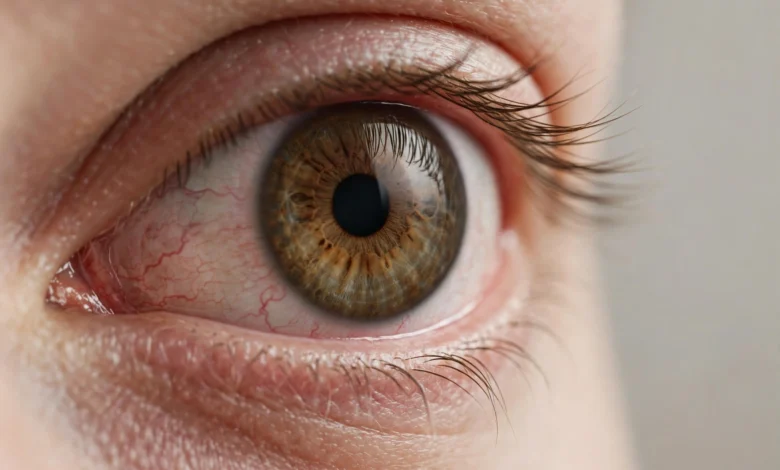
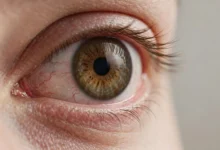
A bloodshot eye on one side can look very different depending on the cause, and describing it carefully helps you and your doctor work out what is going on. The most dramatic form is a subconjunctival haemorrhage: a bright red patch, or sometimes a solid sheet of red, covering part of the white of one eye. It usually appears suddenly — you notice it in the mirror in the morning — and it does not hurt, itch or affect your vision. The red patch may grow slightly over the first 24 to 48 hours, then slowly fade through pink and yellow as your eye absorbs the blood, much like a bruise healing on the skin.
The other common appearance is a network of fine red lines spreading across the white of one eye, which happens when the small blood vessels on the eye’s surface become swollen and dilated. This pattern is more typical of irritation, tiredness, dryness or a mild infection, and it often comes with a gritty or burning feeling, watering, or a sensitivity to light. A red eye with a sticky discharge, especially in the morning when the eyelids feel glued together, points more towards an infection such as conjunctivitis. A red eye with severe pain, a change in vision, or a pupil that looks different from the other eye is a different matter entirely, and it needs urgent care.
What Causes a Bloodshot Eye on One Side?
A bloodshot eye on one side has many possible causes, and the pattern of symptoms usually points to which one it is. A subconjunctival haemorrhage — the bright red patch — happens when a small blood vessel on the surface of the eye breaks. It often follows a sudden rise in pressure in the veins: a strong sneeze, a powerful cough, vomiting, straining, or lifting something heavy. It can also follow an eye injury, rubbing the eye too hard, wearing contact lenses, or an eye infection. Sometimes there is no obvious cause at all, and the vessel simply breaks on its own. Less common causes include diabetes, high blood pressure, medicines that make you bleed more easily such as aspirin or blood thinners, and blood clotting disorders.
Irritation and dryness are the other big group of causes. Smoke, dust, wind, chlorine in a swimming pool, air conditioning and long hours looking at a screen can all dry the surface of the eye and leave the vessels swollen and red. Allergies can do the same, usually with itching and watering, and often in both eyes rather than one. A mild viral infection — the common cold virus reaching the eye — can make one eye red and watery for a few days. Contact lens wear is a frequent cause of one-sided redness: a lens that is dirty, damaged, worn for too long, or slept in can irritate the eye and, in the worst case, lead to a serious infection. If only one eye is red and you wear lenses, the lens in that eye is the first thing to check.
Is a Bloodshot Eye on One Side Usually Serious?
In most cases, a bloodshot eye on one side is not serious, and that is worth saying plainly because the appearance can be alarming. A subconjunctival haemorrhage, the bright red patch, is usually harmless: it does not cause pain, it does not affect your vision, and it goes away on its own within a few weeks without any treatment. Irritation from dryness, tiredness or a screen-heavy day is similarly harmless, and it settles once the eye is rested and moistened. Millions of people get a red eye from time to time, and the great majority of cases need nothing more than time and a little care.
There are exceptions, and knowing them is the point of this article. A red eye becomes serious when it comes with pain, a change in vision, or a sensitivity to light that does not ease. A red eye after a direct injury to the eye or head needs checking, because the injury may have damaged something deeper. A red eye with a thick yellow or green discharge, a fever, or a feeling that something is stuck in the eye can signal an infection that needs treatment. And a red eye that keeps coming back, or appears in both eyes repeatedly, can be a sign of an underlying condition such as high blood pressure, diabetes or a bleeding disorder, which is why repeated episodes deserve a proper medical check rather than being ignored.
What Can I Do at Home for a Bloodshot Eye?
For a painless, bright red patch with no change in vision, the honest advice is that there is nothing you can do to speed up healing — the eye will absorb the blood on its own, usually within two weeks, and often sooner. Artificial tears, the lubricating eye drops sold at pharmacies, can help if the eye feels irritated or gritty, and a cool compress — a clean cloth dampened with cool water, held gently over the closed eye for a few minutes — can soothe the feeling of irritation. Do not rub the eye, because rubbing can break more small vessels and make the redness worse, and do not try to wash the blood out: the blood is trapped under the clear surface layer of the eye, so it cannot be rinsed away.
If the redness is the fine-line pattern of irritation rather than a solid patch, a few simple steps usually help. Rest your eyes from screens, follow the 20-20-20 rule — every 20 minutes, look at something 20 feet away for 20 seconds — and use artificial tears to keep the surface moist. Avoid smoke, dust and strong wind where you can, and do not use redness-relieving eye drops every day: these drops shrink the blood vessels temporarily, but regular use can make the redness rebound and become worse when you stop. If you wear contact lenses, take them out and wear glasses until the eye is completely clear, and throw away the lens that was in the red eye if it was a daily disposable. If the redness does not improve within a few days, or it gets worse, see a doctor rather than trying more home remedies.
When Should I See a Doctor About a Bloodshot Eye?
You should see a doctor promptly if your bloodshot eye comes with any warning sign, even if the redness itself looks mild. Contact your doctor right away if the redness does not go away within two to three weeks, because a subconjunctival haemorrhage that lingers can need investigation. See a doctor urgently if you have eye pain, any change in your vision — blurring, flashes, new floaters, shadows in your side vision, or loss of sight — or if the blood is inside the coloured part of your eye, the iris. A red eye after an injury, a red eye with a thick discharge, and a red eye that keeps coming back are all reasons to be examined.
There are also situations where you should seek emergency care rather than waiting for an appointment. If you have had a serious injury to the eye or head, if your vision has suddenly changed, if you see a large number of new floaters or flashes of light, or if the eye pain is severe, go to an eye emergency service or an emergency department. If you wear contact lenses and develop a painful red eye, remove the lens and seek care the same day, because a contact-lens infection can damage the cornea quickly. When in doubt, the safe choice is to be examined: an eye doctor can look at the eye in a few minutes and tell you whether it is harmless or needs treatment, and that reassurance is worth the visit.
How Is a Bloodshot Eye Diagnosed and Treated?
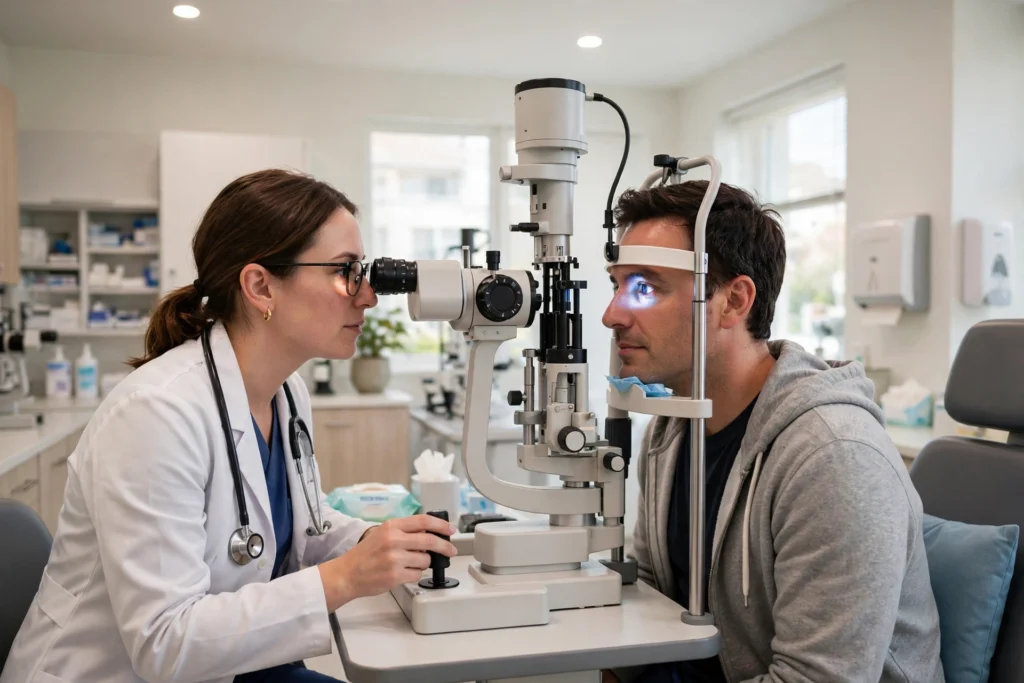
Diagnosing a bloodshot eye usually starts with a simple examination. Your doctor will ask about your health history — when you first noticed the redness, whether there was an injury, whether you wear contact lenses, what medicines you take, and whether you have high blood pressure or diabetes. They will examine the eye with a bright light and, if needed, a slit lamp, which is a microscope that lets them look closely at the surface of the eye, the cornea and the inside of the eye. They may check your blood pressure, especially if you have bleeding elsewhere or repeated episodes, and they may order blood tests if they suspect a clotting problem.
Treatment depends entirely on the cause. A subconjunctival haemorrhage usually needs no treatment at all: the blood is absorbed naturally, and artificial tears can ease any mild irritation. An eye infection may need antibiotic or antiviral drops, while an allergy-related red eye is treated with antihistamine drops and by avoiding the trigger. A contact-lens infection needs the lens removed and specific treatment, and you will be told not to wear lenses until the eye is fully healed. If the redness is caused by an underlying condition such as high blood pressure, treating that condition is the real treatment. The key point is that the treatment follows the diagnosis — which is why a red eye with warning signs should be examined rather than self-treated with drops bought online.
How Can I Prevent a Bloodshot Eye on One Side?
You cannot prevent every bloodshot eye, because a vessel can break without warning, but you can cut the risk considerably with a few habits. Protect your eyes from injury: wear safety glasses for DIY, gardening and sport, and never rub your eyes hard, especially if something gets in them — rinse with clean water or saline instead. Look after your contact lenses carefully: wash and dry your hands before handling them, never sleep in lenses unless they are designed for it, replace them on schedule, and never share lenses or wear someone else’s. Keep your lenses and their case clean, and throw away a lens that feels uncomfortable rather than persevering with it.
General eye health helps too. Give your eyes regular breaks from screens, blink often when you are reading or working, and use artificial tears if your eyes feel dry, especially in air-conditioned rooms or on long flights. Wear sunglasses outdoors to protect against wind, dust and bright light. Manage the conditions that make vessels fragile: keep your blood pressure under control, manage diabetes, and tell your doctor if you are taking blood thinners and notice frequent eye bleeding. Finally, do not smoke, and avoid smoky rooms, because smoke irritates the surface of the eye and dries it out. None of these steps guarantees you will never get a red eye, but together they make it much less likely.
Conclusion
A bloodshot eye on one side usually looks far worse than it is. In most cases it is a broken surface blood vessel, a patch of irritation, or a mild infection, and it clears up on its own within a few days to a few weeks without any treatment. The things to remember are simple: do not rub it, do not try to wash the blood out, take out your contact lenses, and use artificial tears if the eye feels gritty. But do not ignore the warning signs either — pain, a change in vision, a discharge, an injury, or redness that lasts more than two or three weeks all mean you should see a doctor. Most red eyes are harmless, and the quickest way to be sure yours is one of them is to have it looked at.
Why is only one of my eyes bloodshot?
Only one eye is bloodshot because the cause is usually local to that eye rather than something affecting your whole body. A broken blood vessel on the surface of one eye, a speck of dust, a contact lens problem, or a minor injury all affect a single eye, which is why a subconjunctival haemorrhage almost always appears in just one eye. Irritation from rubbing one eye, or sleeping on one side with the eye partly open, can also redden a single eye. When both eyes are red at the same time, the cause is more often something general, such as tiredness, dryness, allergies or a viral infection. A one-sided red eye is therefore usually a local problem, and it is often harmless — but if it keeps happening in the same eye, or it comes with pain or vision changes, get it checked.
How long does a bloodshot eye last?
A bloodshot eye caused by a broken blood vessel — a subconjunctival haemorrhage — usually clears up on its own within two weeks, and most cases are gone within one to three weeks. The red patch may grow slightly over the first 24 to 48 hours, then slowly change colour from bright red to pink and yellow as the eye absorbs the blood. Redness from irritation, dryness or tiredness usually fades much faster, often within a day or two once the trigger is removed and the eye is rested. If the redness has not gone away within two to three weeks, or it keeps coming back, see a doctor, because a lingering red eye deserves a proper examination.
Can lack of sleep cause a bloodshot eye?
Yes, lack of sleep can cause a bloodshot eye. When you are tired, you blink less and your eyes dry out, which makes the small blood vessels on the surface of the eye swell and become more visible. Long nights, shift work, and hours spent looking at a screen without breaks all have the same effect. The redness from tiredness is usually a network of fine red lines rather than a solid red patch, and it often comes with a gritty or burning feeling and a sensitivity to light. It usually clears up after a good night’s sleep and some rest from screens. If your eyes are often red from tiredness, try the 20-20-20 rule, use artificial tears, and aim for regular sleep.
Should I wear contact lenses with a bloodshot eye?
No, you should not wear contact lenses while your eye is bloodshot. Take the lenses out and wear glasses until the eye is completely clear, because a lens can trap irritation against the eye, make an infection worse, and slow down healing. If the lens that was in the red eye was a daily disposable, throw it away; if it was a reusable lens, clean and disinfect it properly before using it again, and replace the case. If you develop a painful red eye while wearing contact lenses, remove the lens and seek medical care the same day, because contact-lens infections can damage the cornea quickly and need prompt treatment.
Can a bloodshot eye be a sign of high blood pressure?
A bloodshot eye can occasionally be linked to high blood pressure, but it is not a reliable sign of it on its own. A sudden rise in blood pressure — from straining, coughing or vomiting — can break a small blood vessel on the eye’s surface and cause a subconjunctival haemorrhage, and people with long-standing high blood pressure may be slightly more likely to get them. However, most bloodshot eyes have nothing to do with blood pressure, and high blood pressure usually has no visible symptoms at all, which is why it is measured with a cuff rather than diagnosed by looking at the eyes. If you get repeated subconjunctival haemorrhages, your doctor may check your blood pressure and look for other causes, but a single red eye is not a reason to assume your blood pressure is high.
Source: Cleveland Clinic — Subconjunctival Hemorrhage