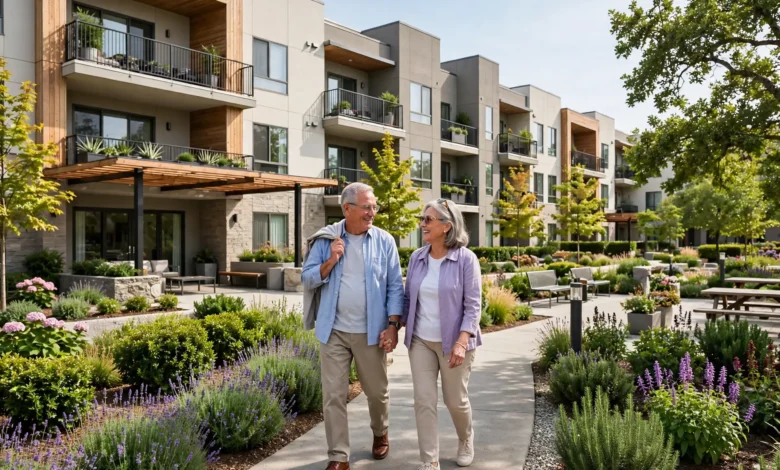
Senior Housing Near Me: How to Find the Right Home for Later Life
Searching for senior housing near me is often the first step in one of the biggest decisions a family makes, and the direct answer is that the right home depends on how much support is needed: sheltered housing suits people who live independently but want the reassurance of an alarm and a scheme manager, extra care housing suits people who need care on site, and retirement villages suit people who want community and facilities in one place. In most cases you need to be over 55 or 60 to qualify, and homes can be rented from a council or housing association or bought privately, usually leasehold. This guide explains the main types of senior housing in the UK, what they cost, how to find schemes near you, how to apply, and what to check before you sign anything. Prices and rules vary by area and change over time, so the figures here are guide ranges and current rules as of late 2026, and your local council can confirm the details for your area.


What Is Senior Housing, and Who Is It For?
Senior housing is the general name for housing designed or designated for older people, and it covers a wide range of homes, from a small flat in a sheltered scheme to a bungalow in a retirement village to a room in a care home. Age UK‘s factsheet on specialist housing for older people groups it by the level of support offered: age-exclusive housing, where residents must be over a certain age but little or no support is provided; housing-with-support, where residents have access to a scheme manager and an emergency alarm but staff do not provide personal care; and housing-with-care, where staff can provide help with washing, dressing, toileting and taking medication. Most schemes set the qualifying age at 55 or 60, although some are higher, and the right choice depends less on age than on need: a fit and active 70-year-old who wants company and a smaller home to maintain has very different needs from an 85-year-old who needs help every day. The first question to ask, then, is not “which scheme is best?” but “what do I, or my parent, actually need now, and what might be needed in a few years?” A home that suits today but cannot adapt to tomorrow is a move you may have to make twice.
When families start searching for senior housing near me, the decision is often made at a moment of pressure — after a fall, a bereavement, a hospital stay, or a winter when the house felt too big and too cold — and that pressure is exactly why it helps to start looking before the decision becomes urgent. Moving while you still have the energy and the choice is very different from moving in a crisis, and the best schemes often have waiting lists, particularly for rented sheltered housing allocated through the council. It also helps to talk the decision through as a family, because the person moving should be at the centre of it: their wishes about location, about staying near friends, about keeping a pet, and about how much independence they want to keep are what make the difference between a home and a placement. Senior housing works best when it is chosen, not imposed, and the schemes that residents praise most are usually the ones where they felt they had a real choice. If you are searching for senior housing near me on behalf of a parent, involve them in every visit and every conversation, because their comfort with the place matters more than any brochure.
The Main Types of Senior Housing Near You

Sheltered housing, also called retirement living, is the most common type of senior housing in the UK, and it is designed for people who can live quite independently but want occasional help and support. Residents have their own flat or bungalow, usually with a kitchen and bathroom, and share facilities such as a laundry room, a lounge and a garden, with a scheme manager or warden on site or on call and a 24-hour emergency alarm system in each home. It does not generally provide personal care, which is the key point to understand: the warden can raise the alarm and offer support, but will not help with washing or dressing. Sheltered housing can be rented from a council or housing association, or bought or rented privately, and most rented sheltered housing is allocated through the local authority housing register, with each council setting its own criteria, often based on local connection, housing need, health and finances. Age UK’s factsheet 64, Specialist Housing for Older People, is the best single introduction to the options, and it is free to download from Age UK’s website.
Extra care housing is the next step up, and it suits people who need more help but still want their own front door. Residents have their own flat, usually in a scheme with communal lounges, a restaurant and gardens, and care is available on site from a care agency registered with the Care Quality Commission, which means help with washing, dressing and medication can be arranged as needs change. It is usually available to rent or buy, and it is a good option for couples with different care needs, because one partner can receive care while the other lives independently in the same flat. Retirement villages are larger developments of bungalows, flats or houses built specifically for older people, often with a care home and communal facilities on the same site, and they suit people who want an active community with organised activities, a gym, a restaurant and neighbours of a similar age. Beyond these, there are almshouses, which are charitable homes provided by almshouse charities, often at low rents, and close care housing, which is a flat or bungalow on the same site as a care home, so that more care is close at hand if it becomes needed. Care homes themselves — residential homes and nursing homes — provide the highest level of care, with staff meeting all activities of daily living, and they are the right choice when someone can no longer live safely even with support at home. The NHS social care guide lists all of these options, and it is a useful starting point for a family conversation.
How Much Does Senior Housing Cost?
The cost of senior housing varies considerably by type, location and whether you rent or buy, and the honest answer is that there is no single price to quote. Rented sheltered housing from a council or housing association is the most affordable route, with rent often comparable to social housing rents in the area, plus a service charge that pays for the alarm, the shared areas and the scheme manager. Private rented sheltered housing costs more, and privately bought sheltered flats are usually leasehold, which means there are service charges and sometimes ground rent to pay on top of the purchase price, so always ask for the full annual cost in writing before you buy. The Leasehold and Freehold Reform Act 2024 became law in May 2024 and changed some leasehold rules, so check the current position before you sign a lease, and consider taking advice from the Leasehold Advisory Service, which is free. Extra care housing costs more than sheltered housing, because care is included, and the care element is usually charged separately from the rent or purchase price, so ask for both figures. Retirement villages are the most expensive option, with purchase prices that vary enormously by location and with monthly service charges that can run into hundreds of pounds, so always ask what the charges cover and whether they can rise.
There is financial help available, and it is worth claiming everything you are entitled to before you decide what you can afford. Attendance Allowance is a non-means-tested benefit for people of State Pension age with a physical or mental disability or a long-term health condition, and it pays £76.70 or £114.60 a week depending on the level of help needed; getting it can also open the door to extra Pension Credit, Housing Benefit or Council Tax Reduction. If care is needed, the local authority can carry out a care needs assessment, and in England for 2026 to 2027 the upper capital limit for care funding is £23,250 and the lower limit is £14,250, which means people with savings above the upper limit usually pay for their own care, while people below the lower limit receive the most help. Housing Benefit can help with rent, and Council Tax Reduction can help with council tax, and both are worth checking even if you assume you will not qualify. Age UK offers free benefits advice and a benefits calculator, and your local council’s adult social care team can explain what help is available in your area. Never assume you cannot afford a move until you have checked the benefits and the funding rules, because many families are surprised by what is available.
How to Find Senior Housing Near You
Finding senior housing near me is easier than it used to be, because several free directories list schemes by postcode. The most comprehensive is HousingCare, run by the Elderly Accommodation Counsel, which holds a nationwide database of rented and leasehold sheltered housing, extra care housing and care homes, and lets you search by location and by type. Your local council’s website will list the sheltered housing schemes in its area and explain how to apply through the housing register, and the council’s adult social care team can advise on extra care housing and care homes. Age UK’s local branches also keep lists of schemes and can talk through the options with you, and the NHS social care guide gives a clear overview of the choices. When you search, use the postcode of the area you want to live in rather than your current postcode if you are planning to move closer to family, and search for several types at once, because a scheme listed as retirement living may also offer extra care, and the categories overlap. It is also worth asking neighbours, friends and local community groups, because the best recommendation often comes from someone who already lives in a scheme and can tell you what it is really like.
Once you have a shortlist from your search for senior housing near me, visit the schemes, and visit more than one, because no website or brochure can tell you what a place feels like. Go at different times of day if you can, talk to residents, eat a meal there if that is offered, and notice the things that matter day to day: is the building warm and well maintained, are the corridors and lifts suitable for someone with limited mobility, is there somewhere to sit outside, is the scheme near shops, a GP surgery and a bus stop, and does it feel welcoming or institutional? Ask the manager how many flats are empty and why, how the service charge is calculated, what the rules are on pets and visitors, and what happens if your care needs increase. Ask to see the most recent Care Quality Commission report if the scheme provides care, because the CQC inspects care services and publishes its findings. And take your time: a good scheme will welcome a second visit and will not pressure you to decide on the spot, while a scheme that pushes for an immediate decision is telling you something about how it treats its residents.
Renting vs Buying Senior Housing
Whether to rent or buy when you find senior housing near me is a decision with financial and practical consequences that deserve careful thought. Renting from a council or housing association is usually the cheapest and most flexible option: the rent is lower, the tenancy is secure, repairs are the landlord’s responsibility, and you can move on if your needs change. Renting privately offers more choice of location and style, but the rent is higher and the tenancy may be less secure. Buying a sheltered or retirement flat gives you ownership and the freedom to decorate and, in some schemes, to leave the property to your family, but it is usually leasehold, which means you own the flat for a fixed number of years rather than the land it sits on, and you will pay service charges and sometimes ground rent for as long as you live there. Leasehold retirement flats can also be difficult to sell, because the pool of buyers is limited to people over 55 or 60, and the value may not rise the way an ordinary house does, so it is important to understand that a retirement flat is a home first and an investment second. Age UK’s factsheet on buying retirement housing explains the leasehold details in full, and it is worth reading before you sign anything.
The financial advice is straightforward: get independent advice before you buy, and do not rush. A solicitor who specialises in leasehold property should check the lease for the length remaining, the service charges, the ground rent, the rules on selling, and any restrictions on who can live there. Ask the seller or developer for the service charge history for the last three years, so you can see whether charges have risen sharply, and ask what the charges cover and whether a reserve fund exists for major repairs. Check whether there is an exit fee or deferred management fee payable when the flat is sold, because some retirement developments charge a percentage of the sale price, and that can come as an unpleasant surprise to a family. If you are selling a family home to buy a retirement flat, consider the timing: selling first gives you certainty about your budget, while buying first can leave you paying two sets of charges. And remember that Attendance Allowance and other benefits are not affected by whether you rent or buy, so the decision should be about the home, not the benefit. A good rule is that if you cannot explain the lease and the charges to a family member in plain language, you have not yet had them explained well enough, and you should ask again.
What to Check Before You Choose a Scheme
Before you choose from the senior housing near me options you have found, work through a short checklist that covers the things residents most often wish they had asked about. First, the support: what help is actually available, who provides it, and what happens at night and at weekends, because a scheme that feels well staffed on a weekday morning can feel very different on a Sunday evening. Second, the alarm: is there a 24-hour emergency alarm in every flat, who responds to it, and how quickly? Third, the costs: what is the full monthly cost including rent or mortgage, service charges, ground rent, heating and any care charges, and how often can those charges rise? Fourth, the rules: are pets allowed, can family stay overnight, are there restrictions on visitors, and what happens if you want to make changes to your flat? Fifth, the location: how far is it to the shops, the GP, the pharmacy and the bus stop, and is the route safe and well lit? Sixth, the community: are there organised activities, a residents’ association, and a communal lounge that people actually use, or is it a building full of closed doors? Seventh, the building itself: is it warm, well maintained and accessible, with a lift if there are upper floors, level access, and good lighting? And eighth, the future: if your health changes, can the scheme provide more care, or would you have to move again?
Two more checks are worth making before you sign anything. One is the Care Quality Commission report, which you should read if the scheme provides any care, because it will tell you whether the care is rated good, requires improvement, or is inadequate, and it will mention specific issues such as staffing or medication. The other is the contract: read it fully, ask a family member or a solicitor to read it too, and make sure you understand the notice period, the rules on ending the tenancy or selling the lease, and any fees payable on leaving. If the scheme is run by a housing association or a charity, check that it is registered and look at its most recent accounts, because a well-run organisation is part of what you are buying into. And finally, trust your instincts: if a place feels right, if the residents look happy, if the staff know people’s names, and if the building feels like a home rather than an institution, those impressions are worth as much as any checklist. The right senior housing near you is the one where you can imagine living happily for years, and that is a judgement only you can make.
Conclusion
Senior housing near me comes in several forms, and the right one depends on how much support you need now and might need later. Sheltered housing offers independence with the reassurance of an alarm and a scheme manager, extra care housing adds care on site for people who need more help, and retirement villages offer community and facilities in one place. Homes can be rented from a council or housing association or bought privately, usually leasehold, and financial help such as Attendance Allowance, Housing Benefit and Council Tax Reduction can make a real difference. Find schemes through HousingCare, your local council and Age UK, visit more than one, and check the support, the costs, the rules, the location and the Care Quality Commission report before you decide. Take your time, involve your family, and choose the home where you can imagine living well — because the best senior housing is not the most expensive or the most impressive, it is the one that feels like home.
What Age Can You Move into Senior Housing?
Most senior housing schemes set the qualifying age at 55 or 60, although some are higher. The right choice depends less on age than on how much support you need, so check the age rule for each scheme you consider.
What Is the Difference Between Sheltered and Extra Care Housing?
Sheltered housing offers support but not care: residents have their own flat with a 24-hour alarm and a scheme manager, but staff do not provide personal care. Extra care housing adds care on site from a CQC-registered agency, so help with washing, dressing and medication is available.
Can I Get Help with the Cost of Senior Housing?
Yes, Attendance Allowance pays £76.70 or £114.60 a week and is not means-tested, and Housing Benefit and Council Tax Reduction may also help. Your local council can carry out a care needs assessment and explain what funding is available in your area.
Do I Have to Sell My House to Move into Senior Housing?
No, you do not have to sell your house. Many people rent sheltered housing while keeping their home, and others buy a retirement flat and keep the family home for a while. Selling first gives you certainty about your budget, but it is your choice.
Can I Keep a Pet in Senior Housing?
It depends on the scheme. Some senior housing schemes welcome pets, while others have rules restricting them, so always ask about the pet policy before you decide, and get the answer in writing.