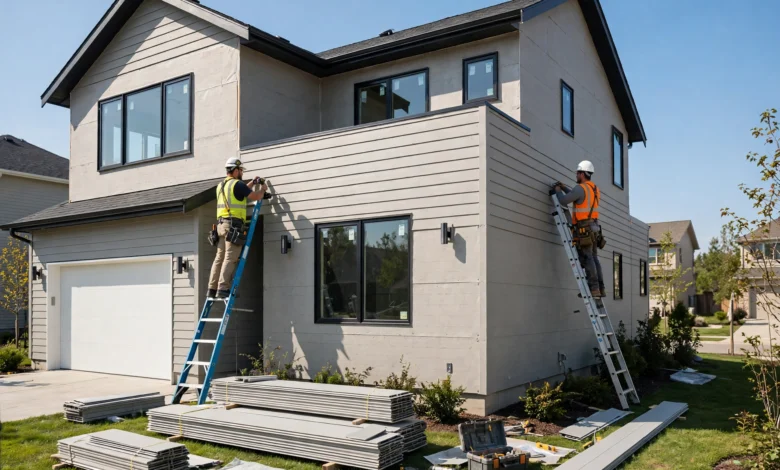
Replacement siding near me is the search homeowners make when their home’s exterior starts to look tired, leak, warp or cost too much to heat, because siding is both the face of your house and its first line of defence against the weather. The short answer is that replacement siding means removing your old exterior cladding and installing a new system, usually vinyl, fibre cement or engineered wood, and the best results come from choosing the right material for your climate, getting several detailed quotes from local installers, and checking warranties and references before anyone starts work. As of November 2026, a full siding replacement typically costs anywhere from around $10,000 to $30,000 or more for an average home, depending on size, material and location, so understanding the options before you call a contractor can save you thousands. This guide covers the materials, the costs, the process and how to choose an installer you can trust.

What Is Replacement Siding and When Do You Need It?
Replacement siding near me becomes a real question when the cladding on your home stops doing its job, and the signs are usually visible long before the damage becomes serious. Look for cracked, warped or buckling panels, paint that peels repeatedly, soft or rotting boards, gaps where panels have pulled away from the wall, and any sign of water staining or mould inside the house near exterior walls. Rising energy bills can also be a clue, since damaged or poorly insulated siding lets heat escape in winter and lets hot air in during summer, and a home that feels draughty despite new windows may be losing conditioned air through its walls rather than its glazing.
Not every problem means a full replacement, because a few damaged panels can often be repaired individually, and a fresh coat of paint can revive wood siding that is structurally sound but cosmetically tired. A full replacement makes sense when damage is widespread, when the existing siding is more than twenty or thirty years old, when you are already planning insulation or structural work that requires the cladding to come off, or when you want a lasting change in the look of your home. A reputable local contractor will inspect your walls, check the condition of the sheathing and moisture barrier underneath, and tell you honestly whether a repair will do or whether replacement is the smarter long-term investment.
How Do I Find Replacement Siding Near Me?
Finding replacement siding near me starts with a local search, but the results alone will not tell you which installer deserves the job, so the next step is to build a shortlist of three or four local companies and compare them properly. Look for contractors who specialise in siding rather than general builders who do it occasionally, check how long they have been trading in your area, and read reviews that mention completed projects similar to yours, since a company that does excellent vinyl work may have little experience with fibre cement. Ask neighbours, friends or your local builders’ merchant which installers they recommend, because a recommendation from someone who has actually had their house re-sided is worth far more than any advertisement.
Once you have a shortlist, ask each contractor for a written, itemised quote that covers the same scope of work, so that you are comparing like with like rather than guessing what each price includes. A proper quote should list the material brand and range, the insulation and house wrap, the removal and disposal of the old siding, the trim, flashing and finishing details, and the warranty terms for both the product and the workmanship. Be cautious of any quote that arrives without a site visit, any contractor who demands full payment upfront, and any price that is dramatically lower than the others, since those are the classic signs of a job that will be cut short, finished badly or abandoned halfway through.
Which Siding Material Is Best for Your Home?
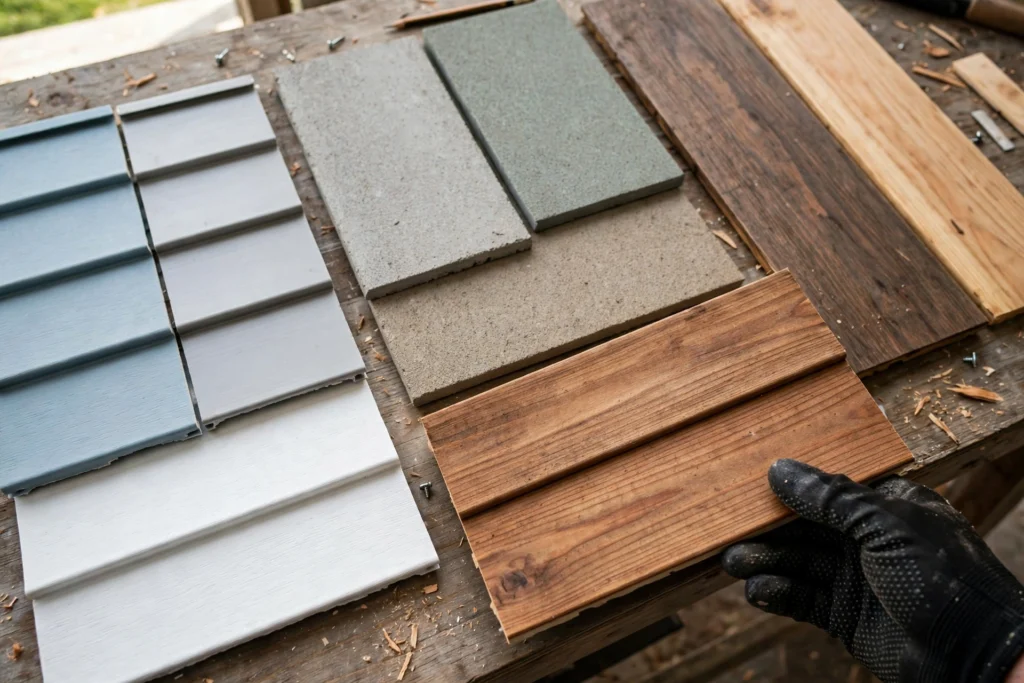
The choice of material is the biggest decision in any replacement siding near me project, because it affects the cost, the appearance, the maintenance and the lifespan of your home’s exterior for decades. Vinyl siding is the most popular choice in many areas because it is affordable, available in a wide range of colours and styles, never needs painting, and resists rot and insects, with a lifespan of twenty to forty years when installed properly. Its weaknesses are that it can crack in extreme cold, warp in intense heat, and look less substantial than other materials, although modern insulated vinyl has improved its appearance and its energy performance considerably.
Fibre cement siding, made from cement, sand and cellulose fibres, is the premium alternative that many homeowners choose when they want the look of wood without the maintenance, since it resists fire, rot, insects and harsh weather, holds paint for many years, and typically lasts fifty years or more. It costs significantly more than vinyl, both for the material and for the skilled labour needed to cut and install it, but it adds more to a home’s value and suits houses where a high-end finish matters. Engineered wood offers a natural appearance at a mid-range price and is lighter and easier to install than fibre cement, while real wood gives unmatched character but needs regular painting or staining and is vulnerable to moisture and insects. The Vinyl Siding Institute (https://www.vinylsiding.org/) publishes independent guidance on vinyl siding performance and installation standards, which is a useful reference when comparing manufacturers’ claims.
How Much Does Replacement Siding Cost in 2026?
The cost of replacement siding near me depends mainly on the size of your home, the material you choose and the condition of the walls underneath, so any price you are given should be treated as a range rather than a fixed figure. As of November 2026, a full siding replacement for an average single-family home typically costs from around $10,000 to $18,000 for vinyl, roughly $15,000 to $30,000 for fibre cement, and somewhere in between for engineered wood, with larger homes, complex shapes, multiple storeys and high-end finishes pushing costs higher. Those ranges generally include removal of the old siding and installation of the new system, but insulation upgrades, structural repairs to the sheathing underneath, and premium trim can add several thousand dollars more.
The most common reason a siding job goes over budget is what the contractor finds underneath the old cladding, since rot, mould or insect damage in the sheathing cannot be seen until the old siding comes off, and repairing it is not optional. A good contractor will warn you about this possibility in advance, include a contingency allowance in the quote, and show you photographs of any damage they find before doing extra work. Always ask whether the quote includes permits, disposal, house wrap, flashing and trim, and whether the warranty covers both the product and the installation, since a cheap quote that excludes those items is not cheap at all once the real total appears.
What Should You Expect During a Siding Replacement?
A siding replacement usually takes between one and three weeks for an average home, depending on its size, the material and the weather, and the process follows a clear sequence that a good contractor will explain before work begins. The crew starts by removing the old siding carefully, inspecting the sheathing and moisture barrier underneath, and repairing any rot or damage they find, since covering up a problem only makes it worse. They then install a weather-resistant barrier, add insulation if agreed, and fit the new siding from the bottom up, with flashing around windows and doors, trim at the corners, and careful sealing at every joint so that water is directed away from the walls.
Expect noise, dust and a certain amount of disruption, since the crew will need access around the whole house, scaffolding or ladders will be in place, and old material will be stacked for disposal. A professional contractor will protect your garden and paths, keep the site tidy at the end of each day, and warn you about the noisiest phases in advance. Before the crew leaves, walk around the house with the project manager and inspect the finished work in daylight, checking that panels are straight, joints are tight, trim is neat and every window and door is properly sealed, because any problem is far easier to fix while the crew and their equipment are still on site than it is weeks later.
How Do You Choose a Good Siding Contractor Near You?
Choosing the right contractor is the single most important decision in a replacement siding near me project, because even the best material will fail if it is installed badly, and the difference between a good installer and a poor one is measured in decades of performance. Start by confirming that the contractor is licensed and insured in your area, and ask for proof of both, since an uninsured worker injured on your property or a company that disappears after a bad job can become your problem very quickly. Ask how many siding jobs they complete in a year, which materials they are certified to install, and whether they can show you finished projects nearby, because manufacturer certifications, such as those offered by leading fibre cement producers, indicate training that a general builder may not have.
References are the most revealing check of all, so ask for the names of three recent customers and actually call them, asking whether the job finished on time, whether the final price matched the quote, whether the crew was tidy and professional, and whether any problems were fixed promptly. A contractor who hesitates to provide references, pressures you to sign immediately, asks for full payment upfront, or offers a price that seems too good to be true is giving you all the warning you need. James Hardie (https://www.jameshardie.com/), one of the largest fibre cement manufacturers, maintains a directory of trained installers, which is a useful way to find contractors with proven experience in that material.
How Do You Maintain New Siding So It Lasts?
New siding lasts longest when it is looked after with simple, regular maintenance, and most of the work involved is quick, cheap and easy to do yourself. Wash the siding once or twice a year with a garden hose and a soft brush, or a low-pressure wash, to remove dirt, pollen and mildew before they stain the surface, and inspect the panels each spring and autumn for cracks, loose sections or gaps around windows and doors. Keep trees and shrubs trimmed back from the walls, since branches that rub against siding can scratch it and trap moisture, and make sure gutters and downspouts direct rainwater away from the walls rather than letting it run down the cladding.
Different materials need slightly different care, so follow the manufacturer’s guidance for your specific product rather than guessing. Vinyl should never be painted with dark colours unless the product is rated for it, since heat absorption can cause warping, while fibre cement needs its paint or sealant refreshed when it begins to wear, typically after many years rather than annually. Wood and engineered wood need the most attention, with repainting or re-staining on the schedule the manufacturer recommends, and any damaged panel should be repaired promptly, since a small crack left alone can let water behind the cladding and turn a minor fix into a major repair.
Conclusion
Replacement siding near me is a search that can end in either a home that looks better, feels warmer and is worth more, or an expensive disappointment, and the difference is almost entirely in the preparation. Choose the material that suits your climate, your budget and your appetite for maintenance, get three detailed written quotes from local specialists, check licences, insurance and references, and never let work start without a clear written agreement on scope, price and warranty. The cheapest quote is rarely the best value, and the best installer is the one who answers your questions clearly, inspects your walls honestly and stands behind the finished work.
Your home’s siding protects everything inside it from wind, rain and cold, and it is the first thing anyone sees when they arrive, so it deserves the same care you would give to a roof or a heating system. Take your time, compare your options, walk around finished jobs in your neighbourhood, and choose a contractor you would be comfortable recommending to a friend. Done properly, new siding is a once-in-a-generation improvement that will protect your home and please your eye for decades, and the effort you put into choosing it is the best investment in the whole project.
While the crew is working on your exterior, it is also worth checking your gutters — our guide to affordable gutter repair near me explains what to look for.
How much does replacement siding cost?
As of November 2026, a full siding replacement for an average single-family home typically costs around $10,000 to $18,000 for vinyl and roughly $15,000 to $30,000 for fibre cement, with engineered wood falling in between. The final price depends on the size and shape of your home, the material chosen, the condition of the walls underneath, and your location. Always get three itemised written quotes covering the same scope, including removal, disposal, house wrap, trim and warranty. Ask each contractor to confirm in writing whether permits, disposal and any structural repairs are included, since those extras can add thousands to the final bill.
What is the best siding material for a house?
Vinyl is the best choice for most homeowners because it is affordable, low maintenance, rot-proof and available in many colours, lasting twenty to forty years. Fibre cement is the premium option, offering a wood-like appearance with fire, rot and insect resistance and a lifespan of fifty years or more, but it costs significantly more. Engineered wood sits in the middle, while real wood gives the finest appearance but needs the most upkeep. The best material depends on your climate, budget and how much maintenance you are willing to do.
How long does it take to replace siding on a house?
A siding replacement typically takes one to three weeks for an average home, depending on its size, the material being installed, the weather, and whether repairs to the sheathing underneath are needed. The crew removes the old siding, inspects and repairs the walls, installs a weather barrier and insulation if agreed, then fits the new siding from the bottom up. Complex homes, multiple storeys and premium materials can extend the schedule. Ask your contractor for a written schedule before work begins, including what happens if bad weather causes a delay.
Can I replace siding myself?
Small repairs, such as replacing a few damaged vinyl panels, are manageable for a confident DIYer with the right tools, but a full siding replacement is generally a job for professionals. Correct installation requires knowledge of flashing, moisture barriers, expansion gaps and manufacturer specifications, and mistakes can cause water damage that costs far more to fix than the labour you saved. Poor installation can also void the product warranty, so most homeowners are better off hiring a certified installer. If you do tackle a small repair yourself, follow the manufacturer’s instructions exactly, since incorrect fitting can void the product warranty.
Does new siding increase home value?
Yes, new siding is one of the home improvements with the strongest return on investment, because it improves kerb appeal, energy efficiency and weather protection all at once. Industry cost-versus-value reports consistently rank siding replacement among the top exterior projects for recouping cost at resale, with fibre cement often returning a particularly high share of its cost. The value gained depends on the material, the quality of installation and the condition of the rest of the home. A tidy, well-finished exterior also helps a home sell faster, since buyers form their first impression before they ever step inside.