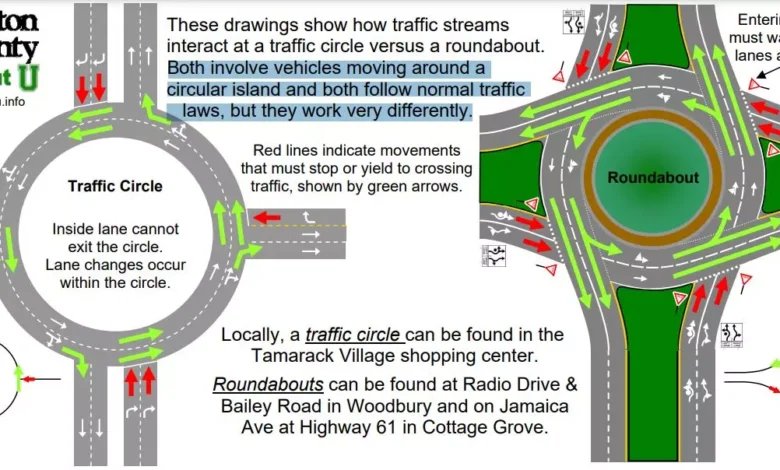
Understanding the difference between road layouts is essential for safe and confident driving in the United Kingdom. Many drivers, especially learners, often confuse the concepts of a ring road and a roundabout. While both involve circular movement in some form, they serve entirely different purposes within the transport network and are designed for distinct driving situations.


The topic of ring road vs roundabout is particularly important because it appears frequently in driving theory tests and real-life navigation. This guide provides a clear and detailed explanation of both, helping you understand how they function, where they are used, and how to approach them correctly as a driver in the UK.
What Is a Ring Road?
A ring road is a major road that encircles a town or city, allowing vehicles to travel around the outskirts rather than passing through the centre. These roads are designed to reduce congestion in busy urban areas by diverting through-traffic away from local streets, making journeys more efficient and less stressful for drivers.
In the UK, ring roads are typically wide, multi-lane routes with relatively higher speed limits compared to residential roads. They often connect to motorways and main routes, making them an important part of regional transport infrastructure. When discussing ring road vs roundabout, it is clear that a ring road operates on a much larger scale and is intended for continuous travel over longer distances.
What Is a Roundabout?
A roundabout is a circular junction where traffic flows in one direction around a central island, which in the UK is clockwise. Drivers approaching a roundabout must give way to traffic already on it, ensuring a smooth and controlled flow of vehicles from multiple directions. This design helps reduce the likelihood of serious collisions.
Roundabouts vary in size and complexity, ranging from small mini-roundabouts in residential areas to large multi-lane versions found on major roads. Unlike a ring road, which serves as a route around a city, a roundabout functions as a single intersection point. This distinction is key when comparing ring road vs roundabout in everyday driving scenarios.
Ring Road vs Roundabout – Key Differences
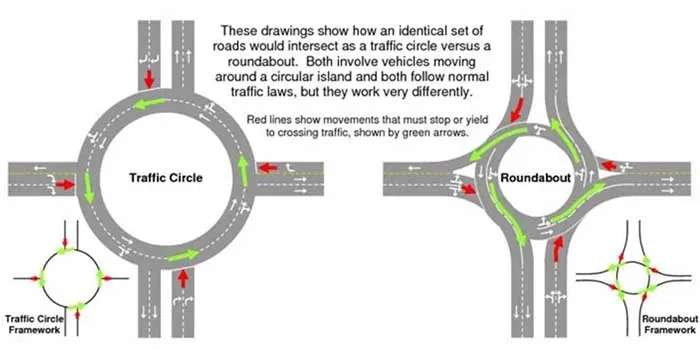
The primary difference between a ring road and a roundabout lies in their purpose, size, and usage. A ring road is a long, continuous route designed to guide traffic around a city, while a roundabout is a compact junction that connects several roads at a single point. This difference in scale makes them suitable for very different traffic needs.
When analysing ring road vs roundabout, it becomes evident that ring roads are built for efficiency in long-distance travel, whereas roundabouts are designed to improve safety and reduce delays at intersections. Ring roads help reduce congestion on a city-wide level, while roundabouts manage traffic flow at specific locations, making both essential in modern road systems.
Ring Road vs Roundabout in the UK – Rules and Driving Tips
Driving on a roundabout in the UK requires a clear understanding of the rules. Drivers must approach with caution, give way to traffic already on the roundabout, and use appropriate signals when exiting. Lane discipline is crucial, especially on larger roundabouts where multiple lanes may lead to different exits.
In contrast, driving on a ring road involves maintaining a steady speed, staying in the correct lane, and planning exits in advance. These roads often have multiple junctions, including roundabouts, where drivers need to remain alert. Understanding the differences in ring road vs roundabout helps drivers adjust their approach and maintain safety in varying conditions.
Ring Road vs Roundabout Sign – How to Identify Them
Road signs in the UK provide essential information to help drivers identify whether they are approaching a ring road or a roundabout. Roundabout signs are typically circular with arrows forming a loop, indicating the direction of traffic flow and warning drivers to prepare to give way.
Ring road signs, however, are usually found on larger directional boards, showing routes that circle a city along with route numbers and destinations. Recognising the difference between a ring road vs roundabout sign is important for navigation, as it helps drivers anticipate road conditions and respond appropriately.
When Is a Ring Road Used vs a Roundabout?
Ring roads are used when there is a need to manage large volumes of traffic and reduce congestion within city centres. They are particularly beneficial for long-distance drivers who need to bypass urban areas, as well as for improving overall connectivity between different regions.
Roundabouts, on the other hand, are used at intersections where traffic from multiple directions needs to merge safely. They are often preferred over traffic lights because they reduce waiting times and lower the risk of high-speed collisions. This practical difference further highlights the importance of understanding ring road vs roundabout in urban planning.
Advantages and Disadvantages
Ring roads offer significant advantages, including improved traffic flow, reduced congestion in city centres, and faster travel times for long-distance journeys. However, they can be expensive to construct and maintain, and their large size may have environmental impacts, such as increased noise and pollution in surrounding areas.
Roundabouts provide a safer alternative to traditional junctions, reducing the likelihood of severe accidents and improving traffic efficiency. Despite these benefits, they can be confusing for inexperienced drivers and may require more space than simple intersections. These factors contribute to the ongoing discussion of ring road vs roundabout in road design.
Common Misunderstandings About Ring Roads and Roundabouts
One of the most common misunderstandings is that ring roads and roundabouts are the same because both involve circular movement. In reality, their functions are entirely different, with one serving as a large transport route and the other acting as a traffic control system at a junction.
Another misconception is that any circular road is a roundabout. This is not true, as many circular routes around cities are actually ring roads designed for continuous travel. Clearing up these misunderstandings is essential when discussing ring road vs roundabout, particularly for new drivers and learners.
Conclusion
In conclusion, understanding the difference between a ring road and a roundabout is essential for navigating UK roads safely and efficiently. Ring roads are large-scale routes that help divert traffic around cities, while roundabouts are smaller junctions designed to manage traffic flow and improve safety.
By learning the key distinctions in ring road vs roundabout, drivers can make better decisions on the road and avoid confusion in unfamiliar areas. This knowledge is especially valuable for learner drivers, as it not only supports theory test preparation but also builds confidence in real-world driving situations.
FAQs
What is a ring road vs roundabout?
A ring road is a large road that circles a city to divert traffic, while a roundabout is a circular junction used to manage traffic at intersections safely and efficiently.
Are ring roads and roundabouts the same in the UK?
No, they are different in both purpose and design. Ring roads are used for long-distance travel around cities, while roundabouts control traffic at specific junctions.
What is a ring road used for in the UK?
A ring road is used to reduce congestion in city centres by allowing vehicles to travel around the outskirts instead of passing through busy urban areas.
How do you drive on a roundabout in the UK?
Drivers must give way to traffic already on the roundabout, follow lane markings, and signal appropriately when exiting to ensure smooth and safe traffic flow.
What does a roundabout sign look like in the UK?
It typically features circular arrows indicating the direction of traffic flow, alerting drivers to prepare to give way at the junction.
What is a ring road sign in the UK?
It is usually part of a larger directional sign showing routes that circle a city, including place names and route numbers for navigation.
Why are roundabouts safer than traffic lights?
Roundabouts reduce the risk of high-speed collisions by slowing traffic and encouraging continuous movement, which lowers the chances of severe accidents.
Can a ring road include roundabouts?
Yes, many ring roads include roundabouts at junctions where different roads connect, combining both systems within the same network.